Does Chess Help Children With ADHD? A Chess Teacher's Perspective After 40 Years
Ny N.M. Ernest (Mr.C) Colding
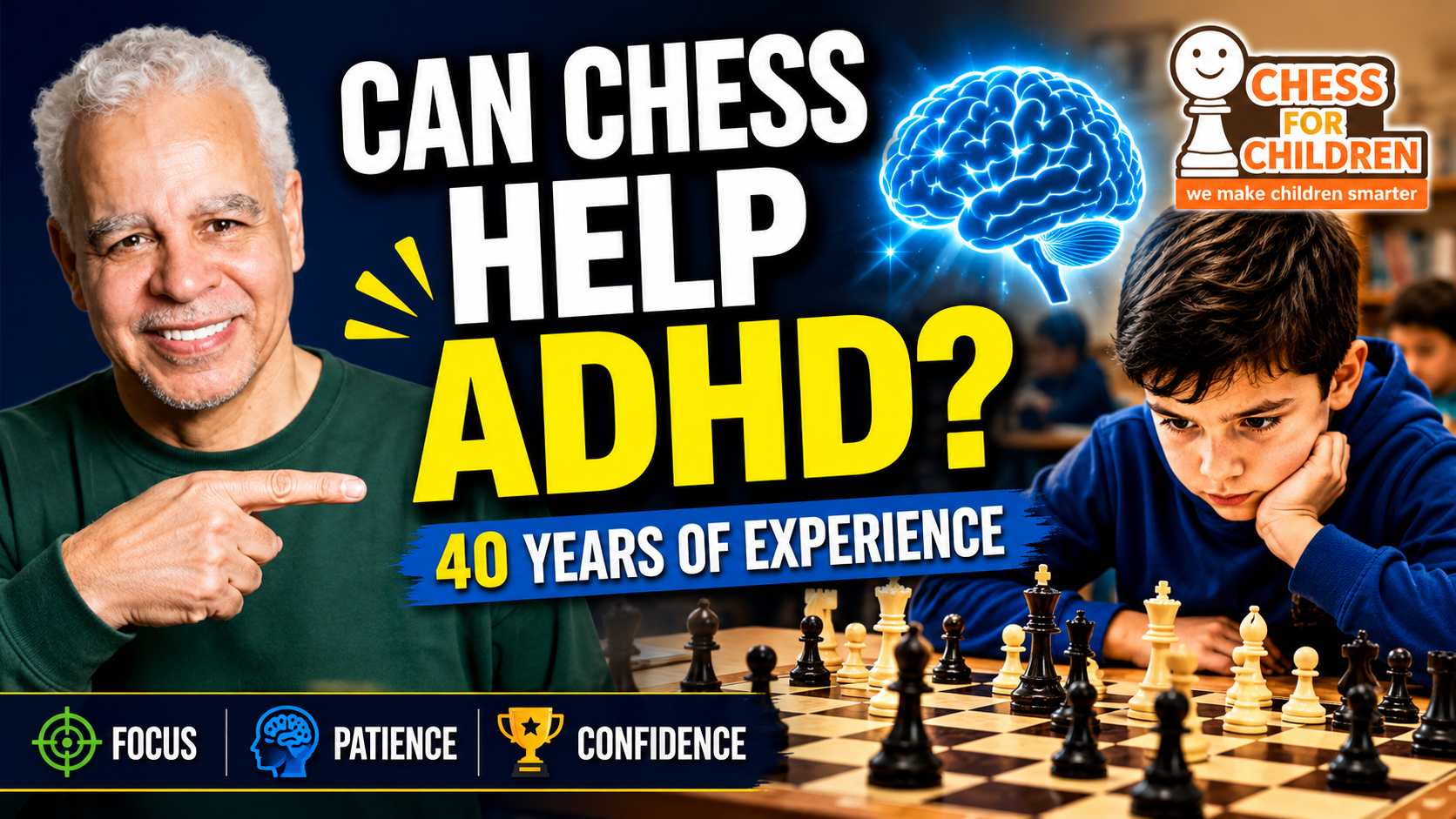
Does Chess Help Children With ADHD? A Chess Teacher's Perspective After 40 Years
Important Disclaimer
Before we begin, I want to make something clear. I am not a doctor, psychologist, therapist, or medical professional. I do not diagnose, treat, or cure ADHD or any other medical condition. This article is based on my experience teaching chess to thousands of children over more than 40 years, including many students who had been diagnosed with ADHD. If you have concerns about your child's health, behavior, or development, please consult a qualified medical professional. This article is intended to discuss the educational benefits of chess and should not be considered medical advice.
Can Chess Help Children With ADHD?
Many parents ask me:
"Does chess help children with ADHD?"
My answer is simple:
Chess is not a cure for ADHD, but it can be an excellent activity for helping children develop concentration, patience, planning skills, and impulse control.
After teaching chess for more than forty years, I have worked with many children who struggled with attention, restlessness, impulsive behavior, and anxiety. Again and again, I have watched those same children become more focused, more patient, and more confident through chess. The reason is not magic.
The reason is that chess rewards the very skills many children need to develop.
What Is ADHD?
ADHD stands for Attention Deficit Hyperactivity Disorder.
Children with ADHD may struggle with:
Paying attention
Sitting still
Following directions
Managing impulses
Staying organized
Completing tasks
Controlling emotions
Every child is different. Some children appear restless and energetic. Others seem distracted and lost in thought. Some struggle with both. One thing many children with ADHD have in common is that they spend a lot of time being corrected. They hear: Sit still." "Pay attention." Focus." "Stop interrupting." Over time, children can begin to feel as though they are constantly doing something wrong. That is one reason I believe chess can be so valuable. Chess gives children an opportunity to succeed.
Why Chess May Help Children With ADHD
Let's think about chess logically.
What does a child do during a chess game?
Before every move they must:
Look carefully.
Analyze the position.
Consider alternatives.
Predict consequences.
Make a decision.
Then they repeat the process. Again. And again. And again. Every game becomes an exercise in concentration.
Children receive immediate feedback. If they rush, they often make mistakes. If they slow down and think, they usually perform better. Over time, children begin to understand an important lesson:
Thinking before acting produces better results. That lesson applies far beyond the chessboard.
How Chess Develops Focus and Concentration
One of the most common complaints parents have is that their child struggles to focus.
Chess gives children a reason to focus.
This is important. Many activities require concentration. Chess rewards concentration. A child who pays attention finds better moves. A child who looks carefully notices threats. A child who thinks deeply solves problems. The reward is built directly into the game. Because children enjoy chess, they are often willing to concentrate far longer than they would in other activities. I have seen children who struggled to focus in the classroom become completely absorbed in a chess game. That level of concentration is difficult to ignore.
How Chess Teaches Impulse Control
Many young players make the same mistake. They see a move. They immediately play it. Then they realize they missed something important. I call this:
Move first. Think later. Chess teaches the opposite habit.
Think first. Move second. Every game reinforces this lesson. Children begin asking themselves:
What is my opponent threatening?
Is this move safe?
What happens next?
Am I overlooking something?
These questions encourage thoughtful decision-making rather than impulsive action. Over time, many children become noticeably more deliberate in their thinking.
Chess, Relaxation, and Learning
Many parents assume chess is only about pieces and moves.
I disagree.
Before children can think clearly, they must learn how to prepare themselves to think. One of the first things I teach students is how to relax. I teach them:
Sit comfortably.
Relax your shoulders.
Breathe normally.
Look at the whole board.
Slow down.
The mind works best when relaxed. A child who is tense often misses things. A child who is calm sees more.
Sometimes children need to stand up. Sometimes they need to stretch. Sometimes they need a drink of water.
Sometimes they simply need reassurance. Good thinking starts with a calm mind.
Chess and the Flow State
There have been many times during my own chess career when I became so focused on a game that I completely lost track of time. Hours passed without me noticing. Psychologists often call this a flow state.
Flow occurs when concentration becomes complete. Distractions disappear. Time seems to move differently.
The activity becomes rewarding in itself. Many people experience flow through:
Meditation
Music
Sports
Art
Writing
Chess can create the same experience. When children enter this state, concentration no longer feels like work.
It feels natural. That is one reason chess can be so powerful.
A Student Named Joseph
One experience from my teaching career has stayed with me for many years.
I was teaching a school chess program when several teachers approached me before class.
They all wanted to warn me about one student. His name was Joseph. In fact, Joseph wasn't even there that day because he had been suspended. The teachers seemed concerned about how he would behave once he returned. Eventually Joseph arrived. He was anxious. Restless. Fidgety. He could barely sit still. Most of all, he had questions. Lots of questions. He kept interrupting because he was worried his questions would never get answered. After watching him for a few minutes, I said:
"Joseph, right now I need to teach the whole class. But later the class will be working on another activity. When that happens, I will take you aside and answer every question you have." Every question. The change was immediate. Joseph relaxed. He stopped interrupting. He became calm. He sat quietly and listened. When the time came, I kept my promise. I took him aside and answered every question .Not some of them. All of them.
What happened next was remarkable. Joseph became one of the best-behaved students in the program.
Not just that day. Every day. I believe Joseph needed something many children need. He needed to know he mattered. He needed to know he was being heard. He needed to know that someone cared about what he had to say.
One day he approached me and asked a question I will never forget. He looked nervous.Almost scared.
Then he asked: "Mr. C, are you proud of me?" My heart melted. I looked at him and said:
"Joseph, I am very, very proud of you."
At the end of the program, Joseph received a trophy for being the Most Improved Student. Many people saw a difficult child. I saw a child who needed patience, structure, encouragement, and respect.
What Research Says About Chess and ADHD
Researchers have become increasingly interested in the relationship between chess and attention.
Several studies suggest that chess training may help improve:
Concentration
Planning
Working memory
Decision-making
Self-regulation
More research is needed, and chess should never be viewed as a medical treatment. However, many findings support what experienced chess teachers have observed for decades. Chess provides repeated opportunities to practice thinking. And thinking is a skill. Like any skill, it improves with practice.
What Parents Should Realistically Expect
Parents should have realistic expectations. Chess is not a cure for ADHD. Chess is not a replacement for medical treatment. Chess is not a miracle solution.
What chess can do is provide children with a structured environment where they repeatedly practice:
Focus
Patience
Planning
Problem-solving
Self-control
These skills often improve gradually. Not overnight. Not in a week. But over time. One move at a time.
Frequently Asked Questions
Can Chess Cure ADHD?
No. Chess is not a cure for ADHD and should not be considered a medical treatment.
Why Is Chess Good for Children With ADHD?
Chess encourages concentration, planning, patience, and thinking before acting.
Can Chess Improve Focus?
Many parents and teachers report improvements in concentration and attention after consistent chess instruction.
Are Private Chess Lessons Good for Children With ADHD?
Many children benefit from the structure, individual attention, and personalized pacing that private lessons provide.
What Age Should Children Start Chess?
Many children are ready to begin learning chess between ages 5 and 7, although some children start earlier.
Final Thoughts: Does Chess Help Children With ADHD?
After teaching thousands of children over more than forty years, I believe chess can be an excellent activity for many children with ADHD. Not because it cures anything. Not because it magically changes who they are.
But because it gives them repeated opportunities to practice concentration, patience, planning, and self-control in a way they genuinely enjoy. Children learn to think before acting.
They learn to solve problems. They learn to remain calm under pressure. Most importantly, they discover that focus is not something they either have or don't have. It is a skill. And like every skill, it can be developed.
One move at a time.
About the Author
National Master Ernest Colding has taught chess to thousands of children through schools, private lessons, tournaments, and community programs for more than 40 years. He is the founder of Chess for Children and author of several books on chess education, including Teach Your Child Chess in 10 Easy Lessons and Teach Your Class Chess.
Ready to Help Your Child Build Focus, Confidence, and Critical Thinking Skills?
Explore: