En Prise in Chess: The First Tactic Every Child Should Learn
Part 1 of the Chess Tactics for Kids Series
Video Lesson: Watch Before You Read
Video Lesson: Watch Before You Read
What Does En Prise Mean in Chess?
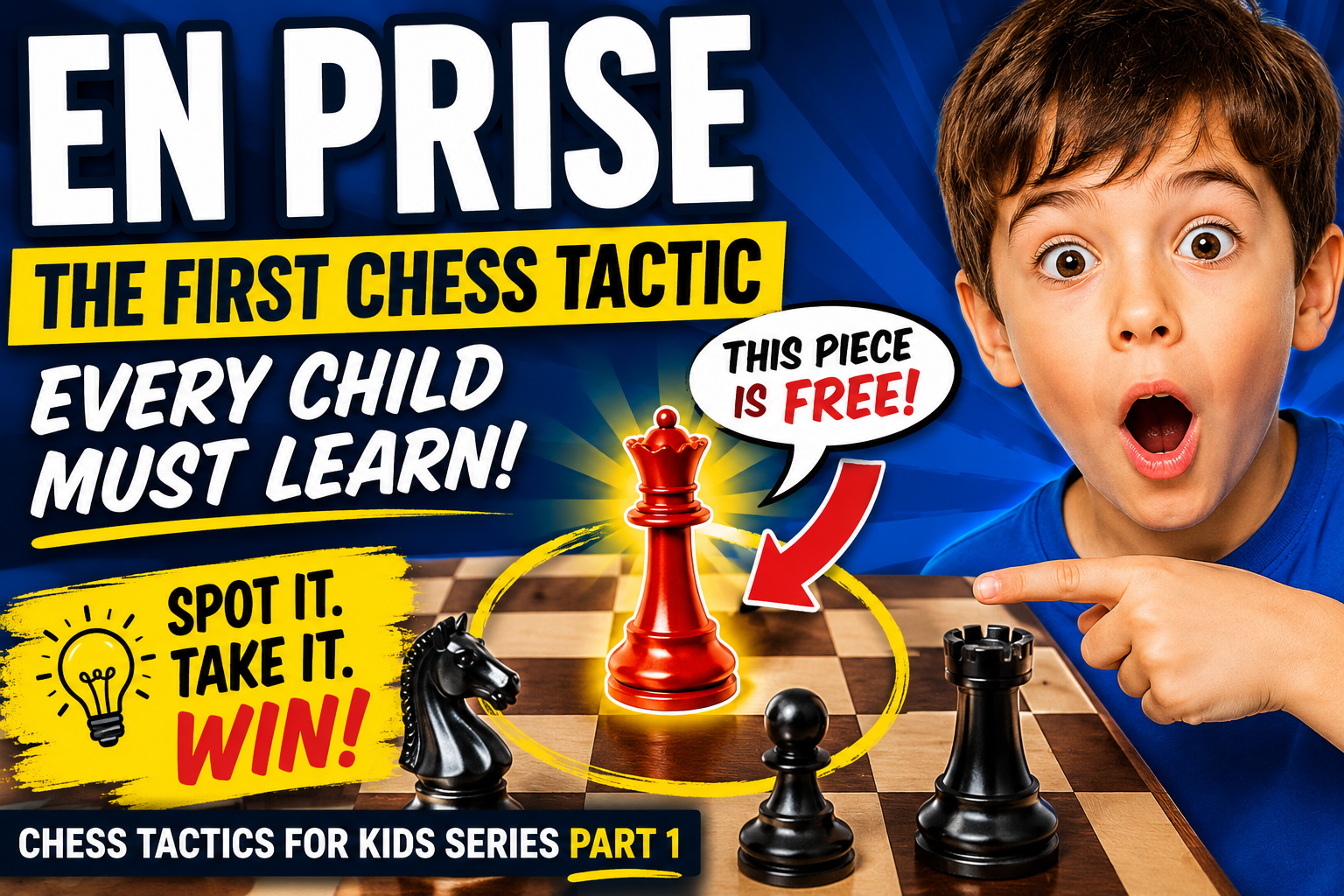
Have you ever watched your child play chess and noticed a free piece sitting on the board? Perhaps a rook was hanging. Maybe a queen could be captured. You wanted to say something, but it wasn't your game. If you've experienced this, you've already seen the most important beginner tactic in chess: En prise. En prise is a French chess term that means a piece can be captured. In simple language, it means a piece is "hanging" or "free for the taking." At Chess for Children, en prise is the first tactic I teach because it helps children win games immediately. Before learning forks. Before learning pins. Before learning combinations. Children must learn how to spot free pieces.
Why En Prise Is the Foundation of All Chess Tactics
Parents often ask me:" Mr. C, what tactic should my child learn first?" My answer surprises them. Not forks. Not pins. Not checkmate combinations. The first tactic is simply learning to recognize when a piece is free. Why? Because every other tactic eventually leads to the same goal: Winning material. A fork wins material. A pin wins material. A skewer wins material A discovered attack wins material. All of these tactical ideas create situations where a piece becomes vulnerable. That's why en prise sits at the very foundation of tactical chess. Think of it as the alphabet of tactics. Before a child can read a book, they must learn the alphabet. Before a child can master tactics, they must learn to spot free pieces.
A Lesson From the Tournament Hall
Years ago, one of my students entered a scholastic tournament. He wasn't one of the strongest players. He didn't know many openings He wasn't studying grandmaster games. Before the tournament I gave him one simple instruction: "Before every move, look for free pieces." Nothing more .No secret opening. No advanced strategy. Just look for free pieces. After the tournament he came running over with a huge smile. "Mr. C, I won three games!" I asked him what happened. His answer was simple." I just kept taking free pieces. "That day he learned a lesson many adults never learn: Most beginner games are won not by brilliant attacks, but by avoiding mistakes and taking advantage of your opponent's mistakes.
How To Spot En Prise Pieces
Every move should begin with two questions.
Question #1: Can I Take Anything For Free?
Before moving, scan the board. Look at every enemy piece. Is it protected? Can you capture it safely? Many children never ask this question. The children who do improve much faster.
Question #2: Am I Leaving Anything For Free?
After choosing a move, stop. Look one more time. Have you left a rook hanging? A bishop? A queen? Can your opponent capture something for free? This simple habit can prevent dozens of mistakes.
Understanding Piece Values
To understand why free pieces matter so much, children should know the value of the chess pieces. Pawn = 1 point Knight = 3 points Bishop = 3 points Rook = 5 points Queen = 9 points Imagine your opponent leaves a queen en prise. That's a nine-point advantage. At the beginner level, gaining that much material often decides the game. This is why tactical awareness matters. The player who consistently captures free pieces usually wins.
The Most Common En Prise Mistakes
After teaching thousands of children, I've seen the same mistakes over and over again.
Chasing Checkmate Too Early
Children become excited about attacking the king. While dreaming about checkmate, they leave a bishop or queen undefended. The attack disappears. So does the piece.
Forgetting About Older Pieces
Many children only focus on the piece they just moved. Meanwhile, another piece sits undefended for several turns. Strong players notice.Weak players don't.
Moving Too Fast
One of the biggest causes of blunders is moving too quickly. The strongest young players develop the habit of checking the board before every move. Good chess begins with careful observation.
A Simple Five-Minute Practice Drill
Parents often tell me: "I don't know enough chess to help my child. "The good news is that you don't need to be a chess expert. Try this simple exercise. Set up random pieces on a board. Some should be defended. Some should not.Then ask: Which pieces are safe? Which pieces are en prise? Which pieces can be captured immediately? Turn it into a game. Five minutes of practice can dramatically improve a child's tactical vision.
How En Prise Leads To Stronger Tactics
This article is the first lesson in our Chess Tactics for Kids Series. Once children learn to spot free pieces, they are ready to move on to more advanced tactical ideas. Coming soon:
Forks: Winning Two Things at Once
Learn how one piece can attack two targets simultaneously.
Pins: When A Piece Can't Move
Discover how powerful pieces become trapped.
Skewers: The Backwards Pin
Force a valuable piece to move and win material behind it.
Double Attacks and Discovered Attacks
Learn how masters create multiple threats at once.
Back Rank Checkmates
Turn tactical advantages into winning attacks. Each tactic builds upon the same foundation: Finding weaknesses and winning material. And it all begins with en prise.
Why Chess Tactics Help Children Think Better
One reason parents love chess is that it teaches children to slow down and think before acting. The habit of checking for en prise pieces teaches: Observation Concentration Attention to detail Patience Critical thinking These skills help children not only in chess but in school and everyday life. Chess teaches children to ask: "What am I missing?" That simple question is incredibly powerful.
Ready To Help Your Child Improve?
If your child wants to become a stronger chess player, start with this simple rule :Before every move, look for free pieces. It sounds simple. But it wins games. And it is the first step toward mastering chess tactics. Want to learn more? Explore our growing Chess Tactics for Kids Series, join the Chess Mastermind Club, or schedule a private lesson with Mr. C. At Chess for Children, we believe that every child can learn to think more clearly, solve problems more effectively, and gain confidence through chess. We Make Children Smarter — One Chess Move at a Time.