How Chess Helps Children Find Confidence, Friendship, and a Place to Belong
By Ernest Colding, Founder of Chess for Children
When most people think about chess, they think about strategy, concentration, and intelligence.
Those things are certainly important.
But after more than forty years of teaching children, I have come to believe that one of the greatest gifts chess offers has nothing to do with ratings, trophies, or championships.
Chess helps children discover confidence.
It helps them make friends.
And sometimes, it helps them find a place where they truly belong.
Over the years I have watched this happen hundreds of times.
Two students in particular taught me lessons I will never forget.
A Boy Looking for a Place to Belong
Several years ago, while I was coaching the chess team at P.S. 282 in Brooklyn, our team was struggling against schools with stronger, higher-rated players.
As head coach, I often attended local tournaments looking for talented children who might be a good fit for our program.
At one tournament, I met a young boy I had known for several years.
I first met him when he was only five years old and boldly challenged me to a game of chess. Over time, I developed a good relationship with both him and his mother.
During one conversation, his mother shared something that broke my heart.
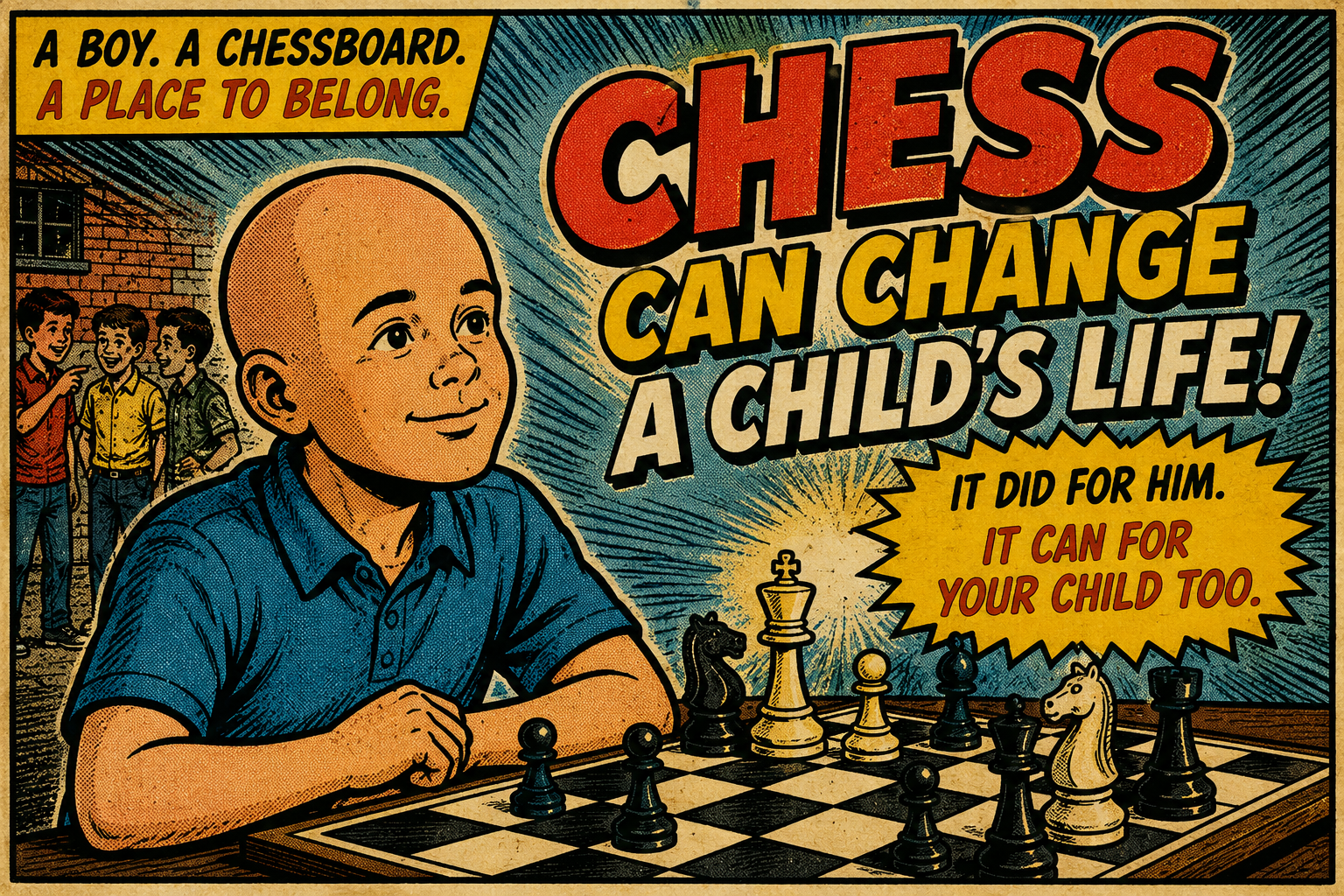
Because of a medical condition, her son had lost his hair.
At school he often felt different.
Like many parents, she worried about how this affected his confidence and happiness.
When he joined our chess program, something remarkable happened.
The children didn't focus on how he looked.
They focused on his ideas.
They admired his creativity.
They respected his hard work.
They enjoyed playing chess with him.
Soon he wasn't simply another student on the team.
He became one of its leaders.
He made friends.
He helped younger players improve.
He became an important member of our chess family.
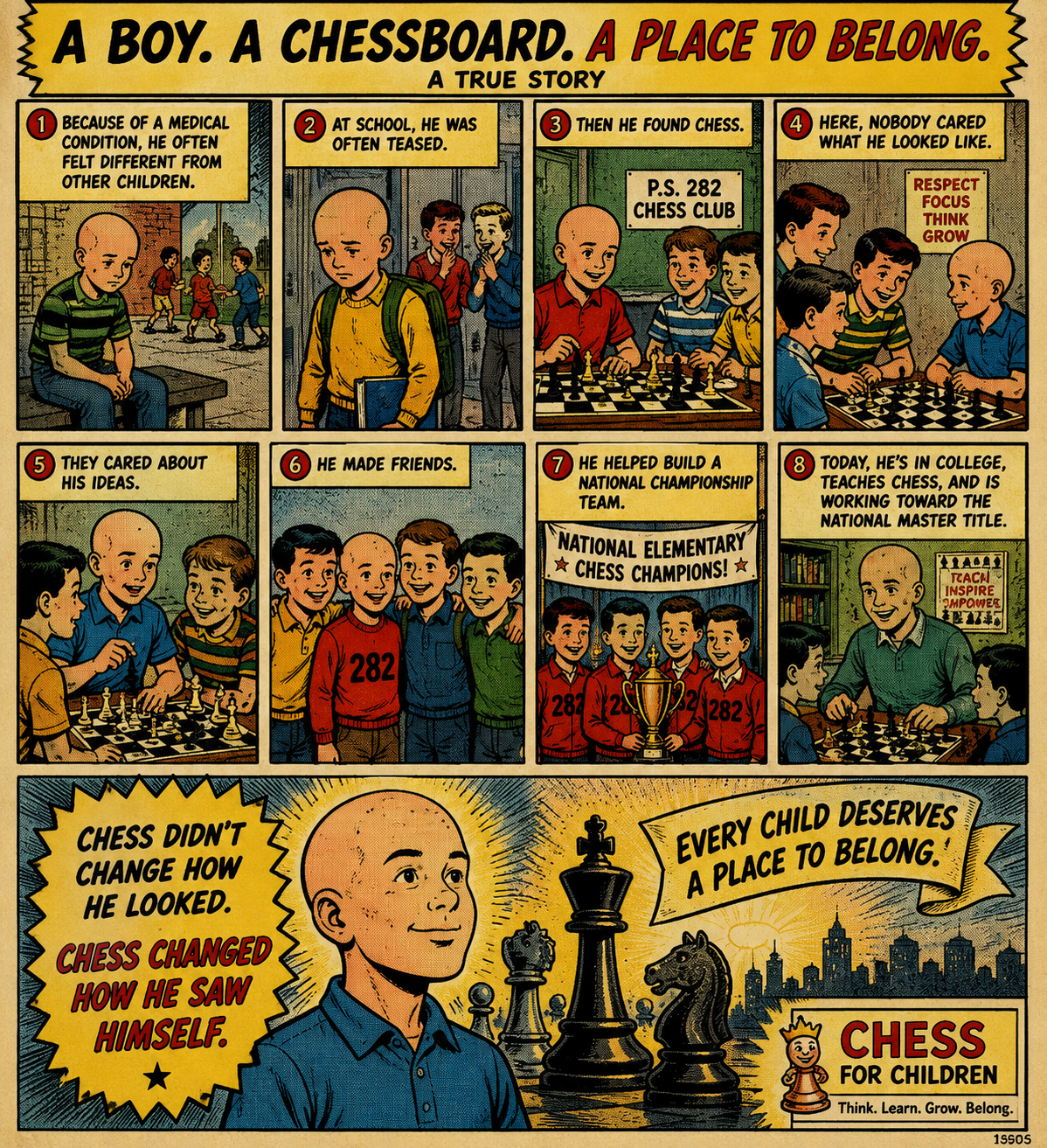
Comic Transcript: A Boy, A Chessboard, A Place to Belong
Panel 1: Because of a medical condition, he often felt different from other children.
Panel 2: At school, he was often teased.
Panel 3: Then he found chess.
Panel 4: Here, nobody cared what he looked like.
Panel 5: They cared about his ideas.
Panel 6: He made friends.
Panel 7: He helped build a National Championship team.
Panel 8: Today, he is in college, teaches chess, and is working toward the National Master title.
Final Message: Chess did not change how he looked. Chess changed how he saw himself. Every child deserves a place to belong.
The Shy Girl Who Started Challenging Adults
Another student taught me a completely different lesson.
When Rebecca first joined our chess program, she was only four years old.
She was painfully shy.
She wouldn't participate.
She rarely spoke.
Like many young children, she seemed uncomfortable interacting with adults outside her family.
There was nothing wrong with her.
She simply lacked confidence.
Then she started learning chess.
She practiced.
She solved puzzles.
She learned how the pieces moved.
Slowly, she began experiencing success.
And then something wonderful happened.
A few months later, the shy little girl who barely spoke was challenging every adult who walked into the room.
"Do you want to play a game?"
Parents laughed.
Teachers smiled.
The transformation was impossible to miss.
Rebecca had discovered something she could do well.
The chessboard had become a place where she felt capable and strong.
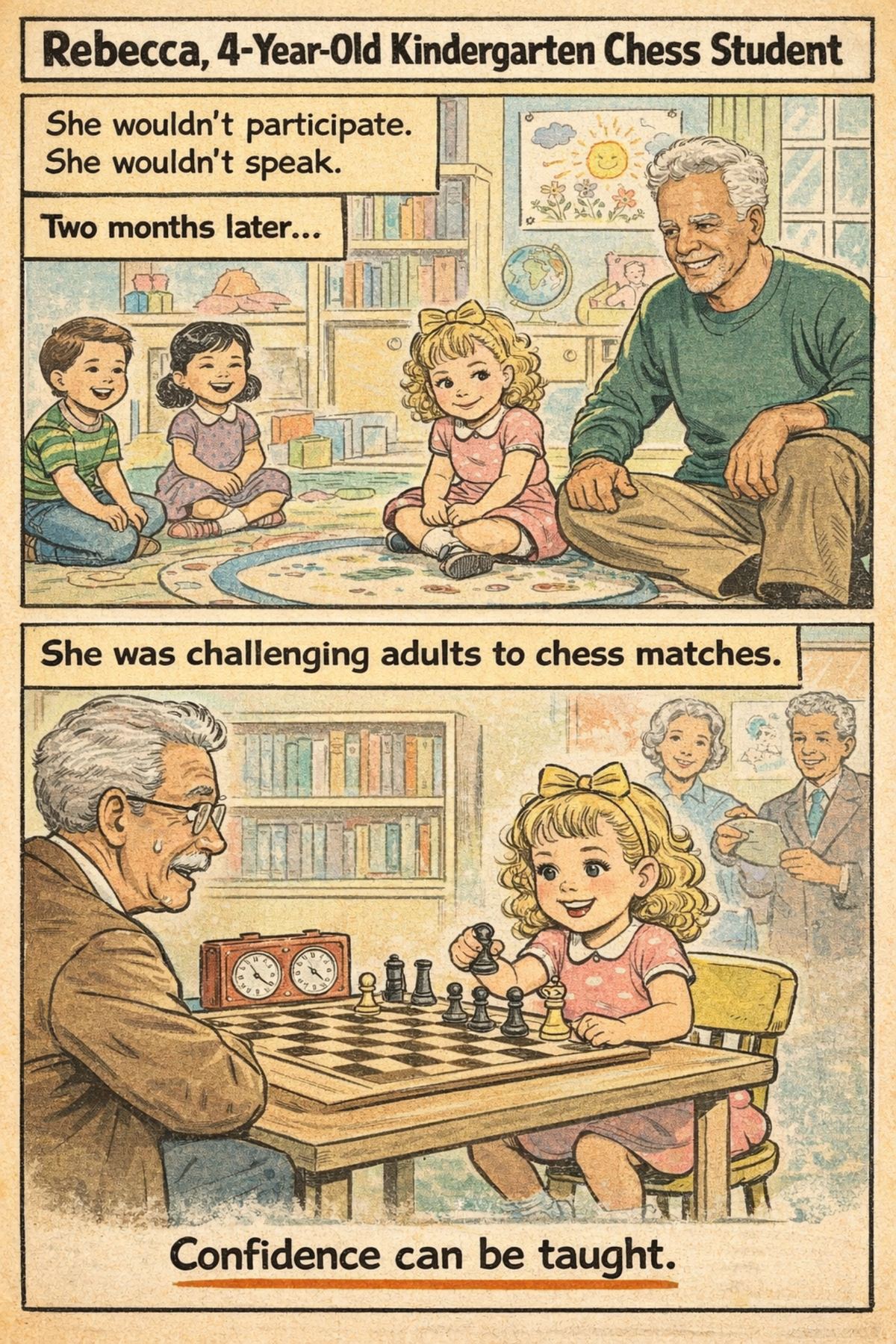
Comic Summary: How Chess Helped Rebecca Build Confidence
Rebecca was a shy four-year-old kindergarten chess student who rarely spoke or participated in class activities. After learning chess and experiencing success at the chessboard, she gradually became more confident.
Within a few months, Rebecca began challenging adults to chess games and actively participating in class. Her story demonstrates how chess can help shy children build confidence, develop self-esteem, improve social skills, and find their voice.
Through practice, problem-solving, and achievement, Rebecca discovered that she was capable of more than she imagined.
Confidence didn't appear overnight.
It grew one small success at a time.
Every puzzle solved.
Every game completed.
Every lesson learned.
Little by little, Rebecca began believing in herself.
Why Chess Builds Confidence
Many activities reward children for being bigger, faster, or stronger.
Chess rewards thinking.
Children learn:
Their ideas matter.
Mistakes are opportunities to learn.
Hard work produces results.
Problems can be solved.
Each success creates evidence that they are capable.
That is how confidence is built.
Not through praise alone.
But through achievement.
Why Chess Helps Children Make Friends
Many parents assume chess is a solitary activity.
In reality, some of the strongest friendships I have ever seen have formed through chess.
Children travel together.
Practice together.
Analyze games together.
Celebrate victories together.
Support one another after losses.
Most importantly, chess teaches children to value qualities such as:
Creativity
Persistence
Sportsmanship
Courage
Problem-solving
Hard work
These qualities often become the foundation of lasting friendships.
What Forty Years of Coaching Has Taught Me
I have coached national champions.
I have coached beginners.
I have coached children who could barely sit still.
I have coached children who were afraid to speak.
Some of my proudest moments have nothing to do with trophies.
They involve:
A child making a friend.
A shy student finding confidence.
A struggling child discovering success.
A young person realizing they are capable of more than they imagined.
Those moments remind me why I founded Chess for Children.
Chess isn't just about creating stronger players.
It's about helping children become stronger people.
Final Thoughts
If your child is shy, struggling with confidence, or searching for a place to belong, chess may offer much more than a game.
It may offer friendship.
It may offer confidence.
It may offer community.
And sometimes, it may help a child find their voice.
After forty years of teaching children, I have seen it happen again and again.
That is why I continue to believe chess is one of the most powerful educational tools ever created.
Ready to Help Your Child Grow?
Explore our: