Within six months, Rebecca was challenging every adult who walked into the room.
That is what chess does. Not the trophies. Not the ratings. That moment — when a child stops waiting for permission to be capable — that's what this is all about.
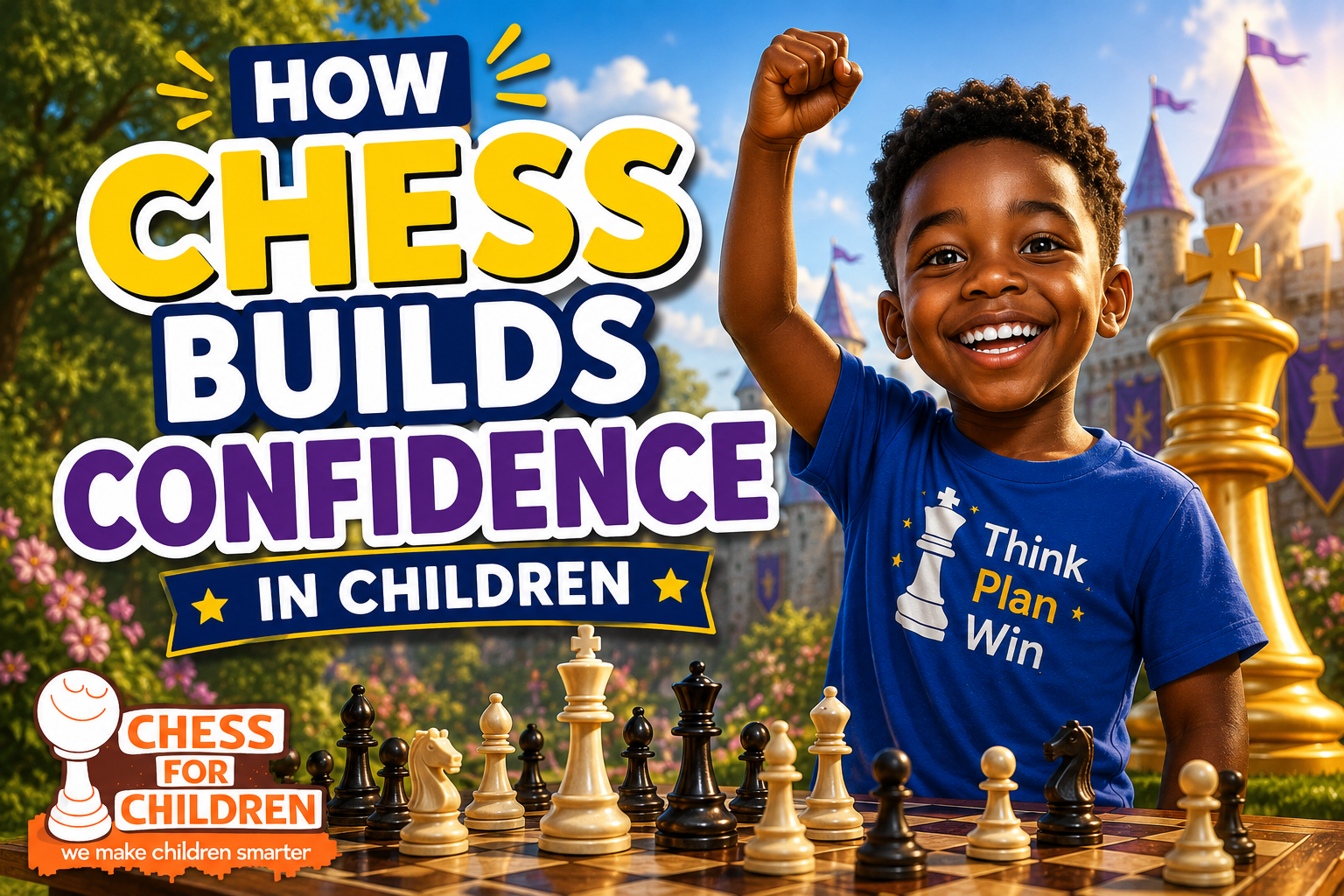
Real Confidence Comes From Real Challenge.
There's a kind of confidence that breaks at the first obstacle because it was never built on anything real.
Chess builds a different kind.
The kind that comes from sitting with a hard problem and not giving up.
From losing and coming back.
From the moment you finally understand something that confused you for weeks.
The Gift of the Honest Mistake In chess, a blunder isn't a failure. It's data.
After every game, I sit with my students and we ask the same questions: What did I see? What did I miss?
What would I do differently?
Discover how Chess for Children helps students develop confidence, problem-solving skills, and a lifelong love of learning.
Ready to help your child build confidence through chess?
At Chess for Children, we make learning fun through videos, puzzles, lessons, and exciting chess adventures designed especially for young learners.
Explore our programs and discover how chess can help your child become a stronger thinker and a more confident learner today! ♟️🚀
Ernest Colding is a National Master and founder of Chess for Children. For more than 30 years he has helped children develop critical thinking, confidence, and life skills through chess.