How to Start a Chess Club at Your School: A Complete Guide from a Coach with 40+ Years of Experience
By National Master Ernest Colding
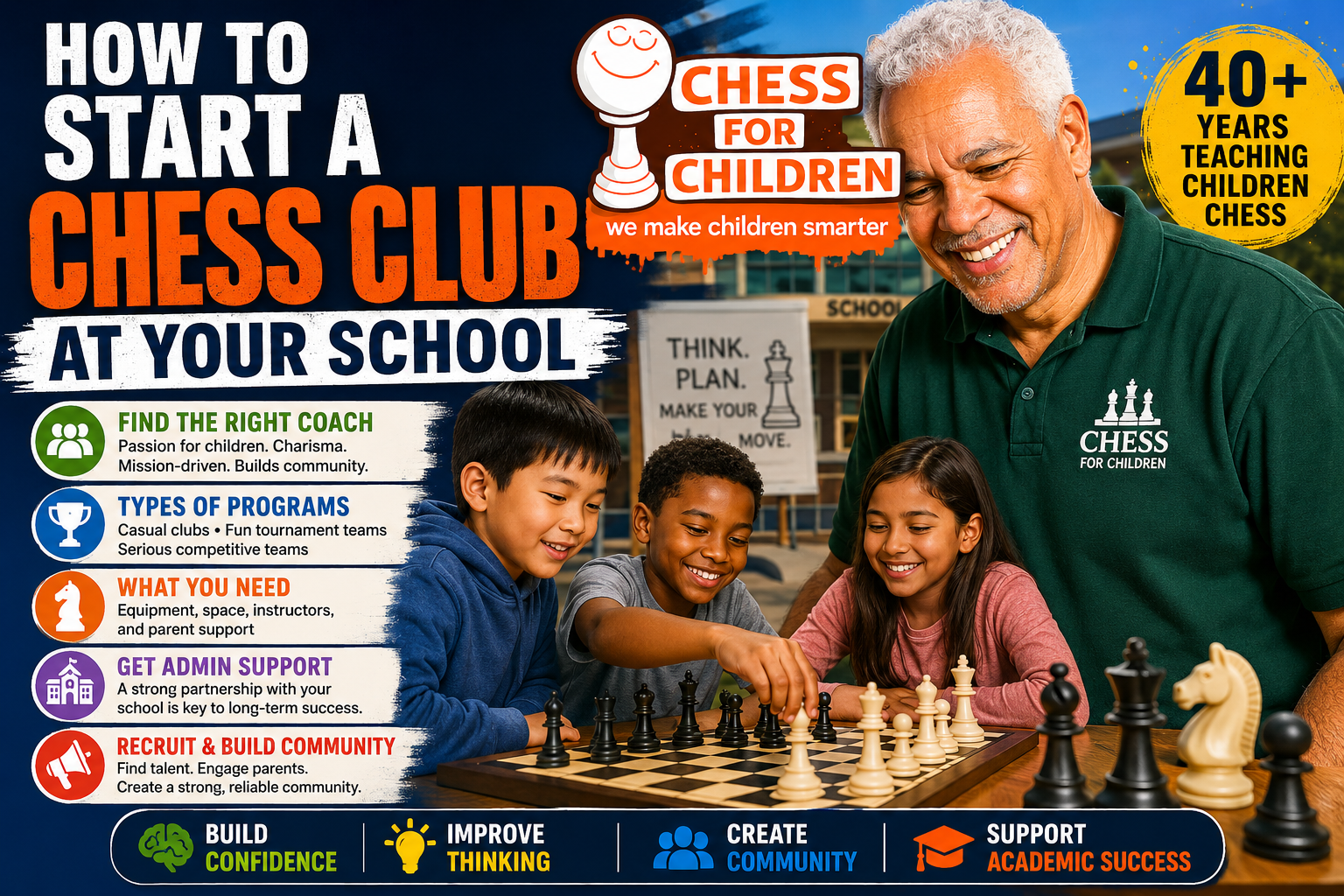
One of the questions I am asked most often by principals, teachers, PTA leaders, and parents is:
"How do we start a chess club at our school?"
After more than forty years of teaching chess and building successful school programs, I can tell you that the answer is simple:
It depends on the type of program you want to build.
I have helped schools create everything from small lunchtime chess clubs to nationally recognized championship teams. Along the way, I have learned that successful programs are not built simply with money or equipment. They are built with vision, leadership, community, and a commitment to children.
Whether your goal is to create a casual chess club or a championship-caliber team, this guide will show you how to build a successful chess program.
The Four Things Every Chess Program Needs
Every successful chess program begins with four essential ingredients:
1. Children
You need students who are interested in learning and playing chess.
2. A Coach
The coach is the single most important part of any chess program.
3. Equipment
At minimum, you will need:
Chess sets
Chess boards
Instructional materials
Demonstration board or projector
4. A Place to Play
A classroom, library, cafeteria, or other quiet location where students can meet and learn.
If you have these four elements, you can have a chess program.
The Most Important Ingredient: The Coach
Many schools make the mistake of focusing only on a coach's chess rating.
While chess knowledge is important, the best school chess coaches possess qualities that go far beyond playing strength.
A Great Coach Likes Children
Children know immediately whether an adult genuinely enjoys working with them.
The best coaches are patient, encouraging, and interested in helping every child succeed.
A Great Coach Has Charisma
Chess should be exciting.
Students should look forward to attending club meetings.
The coach should create enthusiasm, excitement, and energy.
A Great Coach Treats Chess as a Mission, Not a Job
The strongest programs are built by people who believe chess can positively impact children's lives.
They teach more than chess.
They teach thinking.
They teach responsibility.
They teach confidence.
A Great Coach Builds a Community, Not Just a Team
The best programs become families.
Students support one another.
Parents support one another.
Former members return years later to help younger players.
Winning trophies is wonderful.
Building a community is even better.
Commitment of the Head Coach to the Team and Community
One quality that is often overlooked when schools select a chess coach is commitment.
A coach's commitment should extend far beyond teaching lessons and attending tournaments.
The head coach sets the tone for the entire program. Students, parents, and administrators all take their cues from the coach's level of dedication.
A committed coach:
Shows up consistently
Is prepared for every lesson
Communicates regularly with parents
Celebrates student successes
Helps students through disappointments and setbacks
Creates opportunities for children to grow both on and off the chessboard
The coach must understand that he is not simply building a chess team. He is helping to build a community.
Strong chess programs are built on trust.
Parents trust the coach with their children.
Students trust the coach to guide them.
Schools trust the coach to represent their values.
The most successful coaches make a long-term commitment to their students and their school community.
Throughout my career, I have found that the strongest programs are not always the programs with the biggest budgets or the strongest players.
They are the programs led by coaches who genuinely care about the children and families they serve.
Trophies eventually gather dust.
Championship banners eventually fade.
But the relationships built between coaches, students, parents, and schools can last a lifetime.
What Type of Chess Program Do You Want?
Before starting a chess club, it is important to decide what type of program you want to build.
Type 1: The Chess Class
A chess class consists of students learning how to play chess or improve their skills through organized instruction.
Equipment Needed
Chess sets
Demonstration board
Lesson materials
Personnel Needed
Chess instructor
Assistant instructor (recommended)
Benefits
Students:
Learn critical thinking
Improve concentration
Develop problem-solving skills
Learn strategy
Have fun
Type 2: The Casual Chess Club
A casual chess club provides students with a place to gather and play chess in a relaxed atmosphere.
The focus is enjoyment rather than competition.
Equipment Needed
Chess sets
Demonstration board
Chess clocks
Personnel Needed
Adult monitor
Someone familiar with chess rules
Benefits
Students:
Make friends
Play regularly
Improve naturally
Develop sportsmanship
Many schools find this type of club perfect for introducing chess to students.
Type 3: The Recreational Tournament Club
These clubs enjoy competition but keep things fun.
Students compete in local tournaments and matches against nearby schools.
Equipment Needed
Chess sets
Chess clocks
Demonstration board
Scoresheets
Personnel Needed
Coach
Instructor
Parent volunteers
Chaperones
Benefits
Students:
Experience competition
Represent their school
Build confidence
Learn teamwork
This level provides an excellent balance between instruction and competition.
Type 4: The Serious Tournament Team
This is where programs become highly competitive.
These teams often:
Meet multiple times each week
Attend major tournaments
Travel regionally and nationally
Pursue championships
Additional Requirements
Administrative Support
A serious chess team cannot thrive if school leadership treats it casually.
The principal and administration must support the program.
When school leaders value chess:
Students take it seriously
Resources become available
Recognition increases
The program grows
Parent Support
Parents become essential partners.
They often help with:
Transportation
Fundraising
Tournament logistics
Team communication
Event planning
Merchandise
Marketing
A Head Coach
Every successful team needs someone to chart its course.
The head coach establishes:
Goals
Training plans
Tournament schedules
Team culture
Community Building
The strongest teams become communities.
Students help one another.
Parents help one another.
Former players return to mentor younger players.
In my experience, successful programs are built on relationships as much as chess.
Planning Your Program
Before launching a chess club, answer these questions:
Is the Program In-School or After-School?
Do You Want to Compete?
Local Competition or National Competition?
What Is Your Budget?
How Much Time Can You Commit?
What Does Success Mean?
For some schools success means:
Fun
Friendship
Participation
For others success means:
Championships
Trophies
National recognition
Neither answer is wrong.
The important thing is having a clear vision.
How to Find Funding for a School Chess Club
One of the most common concerns schools have is funding.
The good news is that many successful programs begin with modest budgets.
PTA Support
PTAs frequently support chess programs because they promote:
Critical thinking
Academic growth
Enrichment
Community involvement
School Budgets
Many schools have funds available for:
Enrichment programs
Student activities
After-school programs
Fundraising
Popular activities include:
Bake sales
Chess-a-thons
Simultaneous exhibitions
Parent-child tournaments
Community chess events
Sponsorships
Local businesses are often willing to support educational programs.
Community partnerships can significantly reduce costs.
Recruiting Students
One of the best recruiting methods is classroom instruction.
When students experience chess during the school day, interest naturally develops.
Classroom instruction also helps identify talented students.
Throughout my career, I have watched many exceptional young players emerge from ordinary classroom lessons.
A good coach notices these children and helps create opportunities for their development.
How to Identify Gifted Young Chess Players
Some signs include:
Curiosity
Strong players ask questions constantly.
Pattern Recognition
Talented students often recognize tactical patterns quickly.
Persistence
They enjoy solving difficult problems.
Competitive Spirit
Many seek stronger opponents.
Love of Learning
Passion often matters more than talent.
I have coached approximately thirty national champions during my career.
The common factor was rarely natural talent alone.
The common factor was passion.
Common Mistakes Schools Make
Hiring the Wrong Coach
A strong player is not automatically a strong teacher.
Teaching children requires special skills.
Focusing Only on Winning
Programs built solely around trophies often struggle.
The strongest programs focus on learning and growth.
Ignoring Parents
Parents are partners.
Programs that include parents thrive.
Lack of Administrative Support
Without school support, growth becomes difficult.
No Long-Term Plan
Successful programs think beyond the current year.
They create a roadmap for growth.
Creating a Chess Culture Throughout the School
The strongest programs extend beyond the club itself.
School Tournaments
School championships generate excitement and participation.
Chess Bulletin Boards
Celebrate achievements.
Post puzzles.
Promote events.
Chess Newsletters
Keep parents informed and engaged.
Chess Assemblies
Introduce the game to large groups of students.
Recognition Ceremonies
Celebrate effort, sportsmanship, leadership, and improvement—not just trophies.
Frequently Asked Questions About Starting a Chess Club
How many students do I need?
You can start with as few as five students.
Many successful programs began with only a handful of children.
How much does a school chess club cost?
Costs vary greatly.
A small club can often begin with a few hundred dollars in equipment.
Competitive programs require larger budgets.
Do I need a certified chess coach?
Not necessarily.
The most important qualities are teaching ability, commitment, and a genuine love of working with children.
Can beginners join?
Absolutely.
Many successful players began with no experience at all.
How often should a chess club meet?
Once per week is enough to start.
Serious competitive teams often meet multiple times each week.
The Real Purpose of a School Chess Program
People often ask whether the goal of a chess program is to create champions.
The answer is no.
Champions are wonderful.
I have coached many of them.
But the true purpose of a chess program is to help children develop skills that will benefit them throughout life.
Chess teaches children to:
Think before acting
Accept responsibility
Solve problems
Plan ahead
Handle success
Deal with disappointment
Respect others
These lessons remain long after students forget opening theory or tournament results.
Final Thoughts
Starting a chess club does not require a massive budget.
It does not require hundreds of students.
It does not require a national champion.
What it requires is vision.
Find a coach who loves children and treats teaching as a mission.
Provide students with a place to learn and play.
Build support among parents and administrators.
Create a strong community.
Do these things consistently, and you will discover what I have learned after more than forty years of teaching chess:
A successful chess program is never really about chess.
It is about helping children become better thinkers, better decision-makers, and better people.
And that is the true power of chess.