How to Teach Your Toddler Chess:
Part 2 – Creating the Perfect Learning Environment
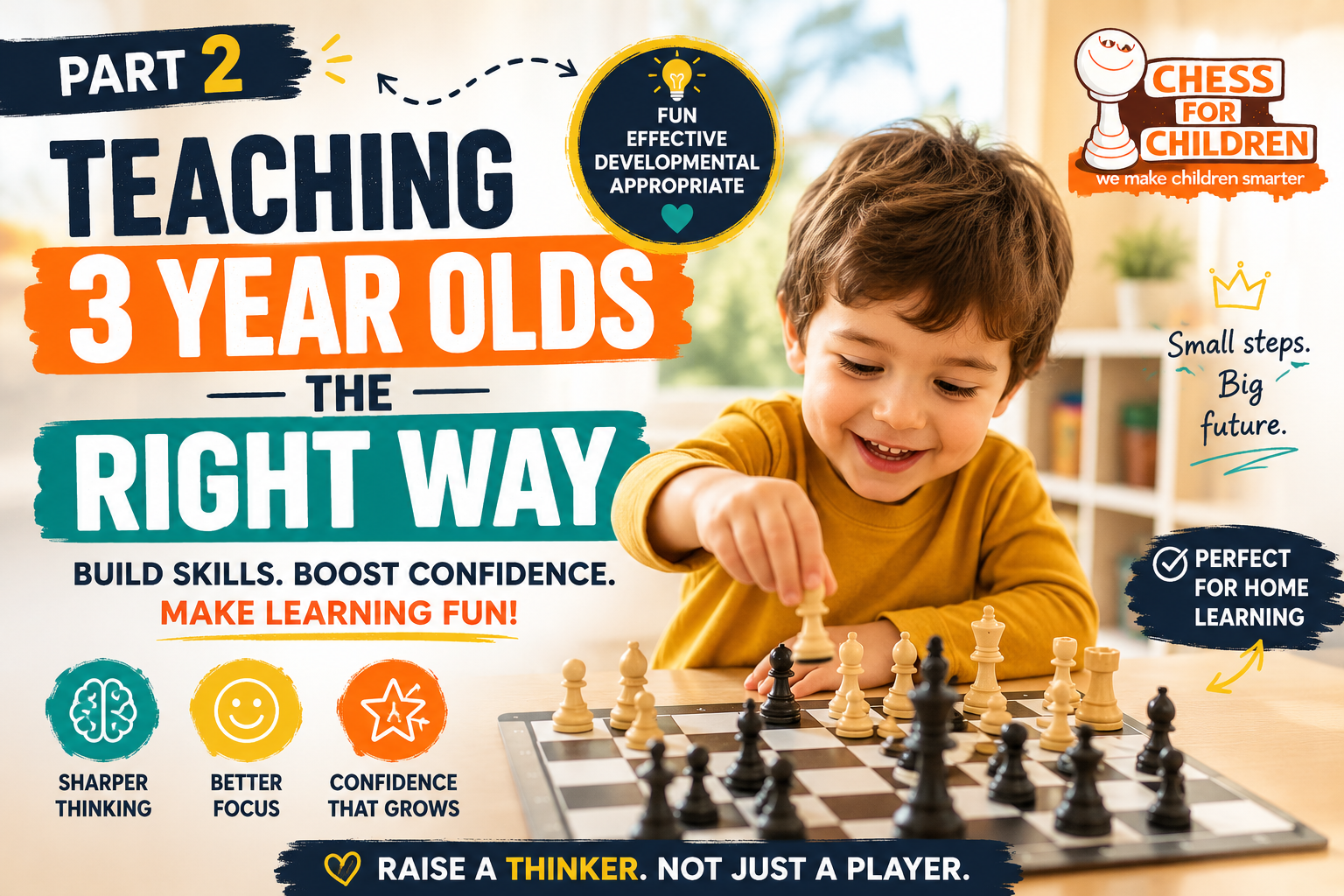
The secret to helping your child learn chess isn't finding the perfect lesson. It's creating the perfect place to learn.
Many parents believe that teaching chess begins with explaining how the pieces move. In reality, successful learning starts long before the first pawn is pushed.
If you want your toddler to enjoy chess and look forward to learning, the environment matters just as much as the lessons themselves.
In Part 1 of this series, we discussed why children as young as three years old can begin learning chess concepts. Today we'll explore how to create a learning environment that encourages focus, curiosity, and fun.
Many parents believe that teaching chess begins with explaining how the pieces move. In reality, successful learning starts long before the first pawn is pushed.
If you want your toddler to enjoy chess and look forward to learning, the environment matters just as much as the lessons themselves.
In Part 1 of this series, we discussed why children as young as three years old can begin learning chess concepts. Today we'll explore how to create a learning environment that encourages focus, curiosity, and fun.
Why the Learning Environment Matters
Toddlers learn differently from older children.
They are easily distracted by noise, toys, televisions, and other activities happening around them.
A child who struggles to focus in a busy environment may suddenly become attentive in a calm and organized space.
The goal is not to create a classroom.
The goal is to create a special place where chess becomes something exciting and important.
When children associate a particular place with chess, they begin to mentally prepare themselves for learning whenever they sit down there.
They are easily distracted by noise, toys, televisions, and other activities happening around them.
A child who struggles to focus in a busy environment may suddenly become attentive in a calm and organized space.
The goal is not to create a classroom.
The goal is to create a special place where chess becomes something exciting and important.
When children associate a particular place with chess, they begin to mentally prepare themselves for learning whenever they sit down there.
Choose a Special Chess Spot
Select a small area in your home where chess lessons will always take place.
This might be:
A kitchen table
A small desk
A corner of the living room
A child's activity table
The location doesn't need to be fancy.
What matters is consistency.
When your child sees the chess board set up in the same place each time, they begin to understand that this is "chess time."
Consistency creates comfort, and comfort encourages learning.
Reduce Distractions
Young children have short attention spans.
Try to eliminate as many distractions as possible during your chess sessions.
Consider: Turning off the television Putting away tablets and phones
Removing unnecessary toys from the area Limiting background noise Even ten focused minutes can be more valuable than thirty distracted minutes.
Remember, toddlers don't need long lessons.
They need positive experiences.
Consider: Turning off the television Putting away tablets and phones
Removing unnecessary toys from the area Limiting background noise Even ten focused minutes can be more valuable than thirty distracted minutes.
Remember, toddlers don't need long lessons.
They need positive experiences.
Use a Child-Friendly Chess Set
A large, sturdy chess set can make a tremendous difference.
Young children love touching and moving the pieces. Small tournament pieces may feel difficult for tiny hands to manage.
Look for:
Larger pieces
Durable materials
Clear distinctions between the sides
Pieces that are easy to recognize
The chess set should invite exploration.
Many children enjoy simply playing with the pieces before they understand the rules. That's perfectly fine. Curiosity is often the first step toward learning.
Create a Positive Atmosphere
The learning environment should feel welcoming.
Smile often.
Celebrate effort.
Avoid criticism when mistakes happen.
Your child should feel that chess is a fun activity shared with someone they trust.
Remember that at this age, the relationship is more important than the lesson.
If your child enjoys spending time with you, they will naturally become more interested in learning.
Keep Sessions Short
One of the biggest mistakes parents make is trying to teach too much at once.
For a three-year-old, five to ten minutes may be enough.
End the lesson while your child is still interested.
This creates anticipation for the next session.
It's far better to finish with a child saying, "Can we do more?" than hearing, "I'm bored."
Build a Routine
Children thrive on routines.
Try to schedule chess at approximately the same time each day or week.
Examples:
After breakfast on Saturdays
Before bedtime twice a week
After school each afternoon
The routine helps transform chess from an occasional activity into a regular habit.
Learning Happens Through Play
At this age, don't worry about teaching everything immediately.
Let your child:
Touch the pieces
Set up the board
Name the pieces
Create stories about the characters
Move pieces around and experiment
Play is learning.
The more enjoyable the experience becomes, the more likely your child will continue developing an interest in chess.
Final Thoughts
Creating the right learning environment doesn't require expensive equipment or a dedicated chess room.
It simply requires a quiet space, a welcoming atmosphere, and a commitment to making chess enjoyable.
The environment you create today can shape your child's attitude toward learning for years to come.
In Part 3 of our series, we'll discuss one of the most important decisions parents make when teaching young children chess: choosing the right chess set and learning materials.
Ready to Begin Your Child's Chess Adventure?
♟️ Chess for Children — We Make Children Smarter!
Suggested Internal Links:
Jess's Chess Adventure
Private Chess Lessons
School Chess Programs
T
Teach Your Child Chess in 10 Easy Lessons
How to Teach Your Toddler Chess – Part 1
Copyright © 2026
Created with