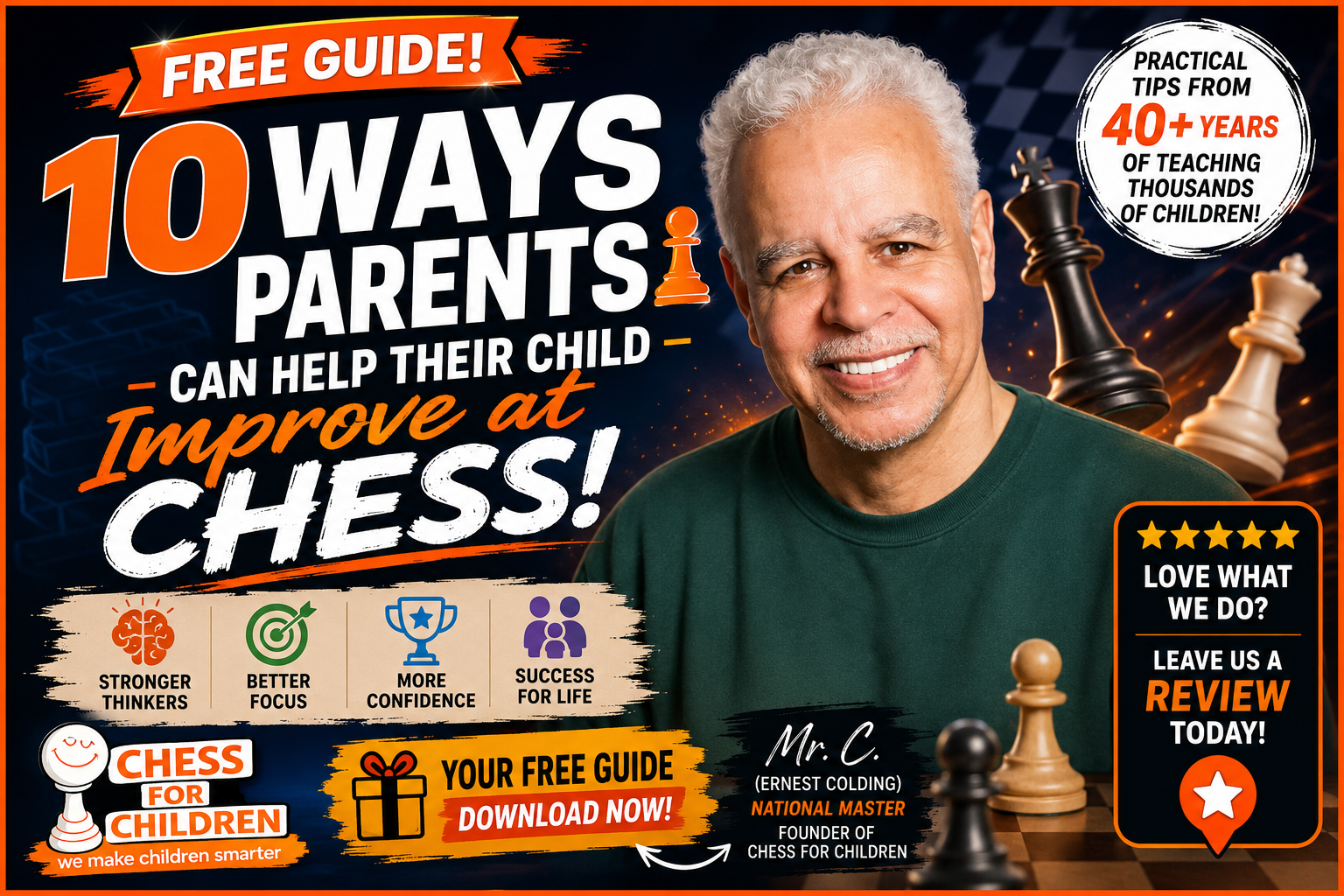
10 Ways Parents Can Help Their Child Improve at Chess
FREE Parent Guide from National Master Ernest "Mr. C." Colding
Introduction
Every parent wants to see their child succeed.
Whether your son or daughter has just learned how the pieces move or is already competing in tournaments, there are simple things you can do at home that will dramatically improve both their chess and their confidence.
After more than 40 years of teaching thousands of children, I've discovered something important:
The parents who become part of the learning process often raise the strongest, happiest chess players.
This guide shares ten practical ideas that any family can begin using today.
📥 Download Your FREE Guide
1. Be Patient
Every child learns at a different pace.
Some children improve quickly while others need more time to develop confidence. Comparing your child to another player only creates unnecessary pressure.
Celebrate improvement instead of perfection.
Confidence grows much faster than talent.
2. Make Sure Your Child Gets Proper Nutrition
Chess is often called the gymnasium of the mind.
A tired or hungry brain doesn't think well.
Healthy meals, water, and a good breakfast before lessons or tournaments can make a tremendous difference in concentration.
3. Give Your Child Responsibilities
Children who learn responsibility at home often become more disciplined at the chessboard.
Simple chores teach:
- Responsibility
- Concentration
- Organization
- Follow-through
These are all qualities of strong chess players.
4. Make Sure Homework Comes First
School always comes before chess.
Children who develop strong study habits usually become stronger chess students because they've learned how to concentrate and complete difficult tasks.
Good students often become good chess students.
5. Make Sure They Have the Right Coach
The right coach can change everything.
A great chess coach doesn't simply teach moves.
A great coach teaches:
- Confidence
- Critical thinking
- Sportsmanship
- Problem solving
- Love of learning
The relationship between coach and student matters just as much as chess knowledge.
6. Be Consistent
One lesson every week.
A few puzzles every week.
A few games every week.
Consistency always beats occasional marathon practice sessions.
Small improvements become big improvements.
7. Encourage Them Whether They Win, Lose, or Draw
Every great player loses.
Instead of asking:
"Did you win?"
Ask:
"What did you learn today?"
Children who feel supported become resilient learners.
8. Lose the Sarcasm
Children remember criticism much longer than adults realize.
Instead of saying:
"How could you miss that?"
Try saying:
"You'll see that move next time."
Encouragement builds confidence.
Confidence builds stronger players.
9. Play Chess Together
If you know how to play...
Play with your child.
If you don't...
Help them find:
- Chess friends
- School chess clubs
- Chess play dates
- Family game nights
Children improve fastest when chess is fun.
10. Help Your Child Relax
Children think better when they feel calm.
Before tournaments:
- Get enough sleep.
- Eat breakfast.
- Arrive early.
- Smile.
- Remember that chess is supposed to be enjoyable.
A relaxed child usually plays better chess.
⭐ BONUS
The #1 Mistake Parents Make
After teaching chess for more than four decades, I've seen one mistake repeated again and again.
Parents become so focused on winning that they forget why their child started playing in the first place.
Chess is not just about trophies.
It's about raising children who know how to:
- Think independently.
- Solve difficult problems.
- Persevere after setbacks.
- Stay calm under pressure.
- Believe in themselves.
Ironically, when children enjoy the game and feel supported, they often improve much faster than children who feel constant pressure to win.
The goal isn't simply to raise a stronger chess player.
The goal is to raise a stronger thinker.
Ready for the Next Step?
If your child loves chess and wants to improve faster, I'd love to help.
Private lessons allow me to:
✔ Create a personalized improvement plan.
✔ Prepare students for tournaments.
✔ Build confidence.
✔ Focus on your child's unique strengths.
Enjoyed This Guide?
If Chess for Children has helped your family, I'd truly appreciate it if you could take one minute to leave us a Google Review.
⭐⭐⭐⭐⭐
👉 Leave a Google Review
More Free Resources for Parents: