Teach Your Toddler Chess – Part 4: The Chessboard
By National Master Ernest Colding
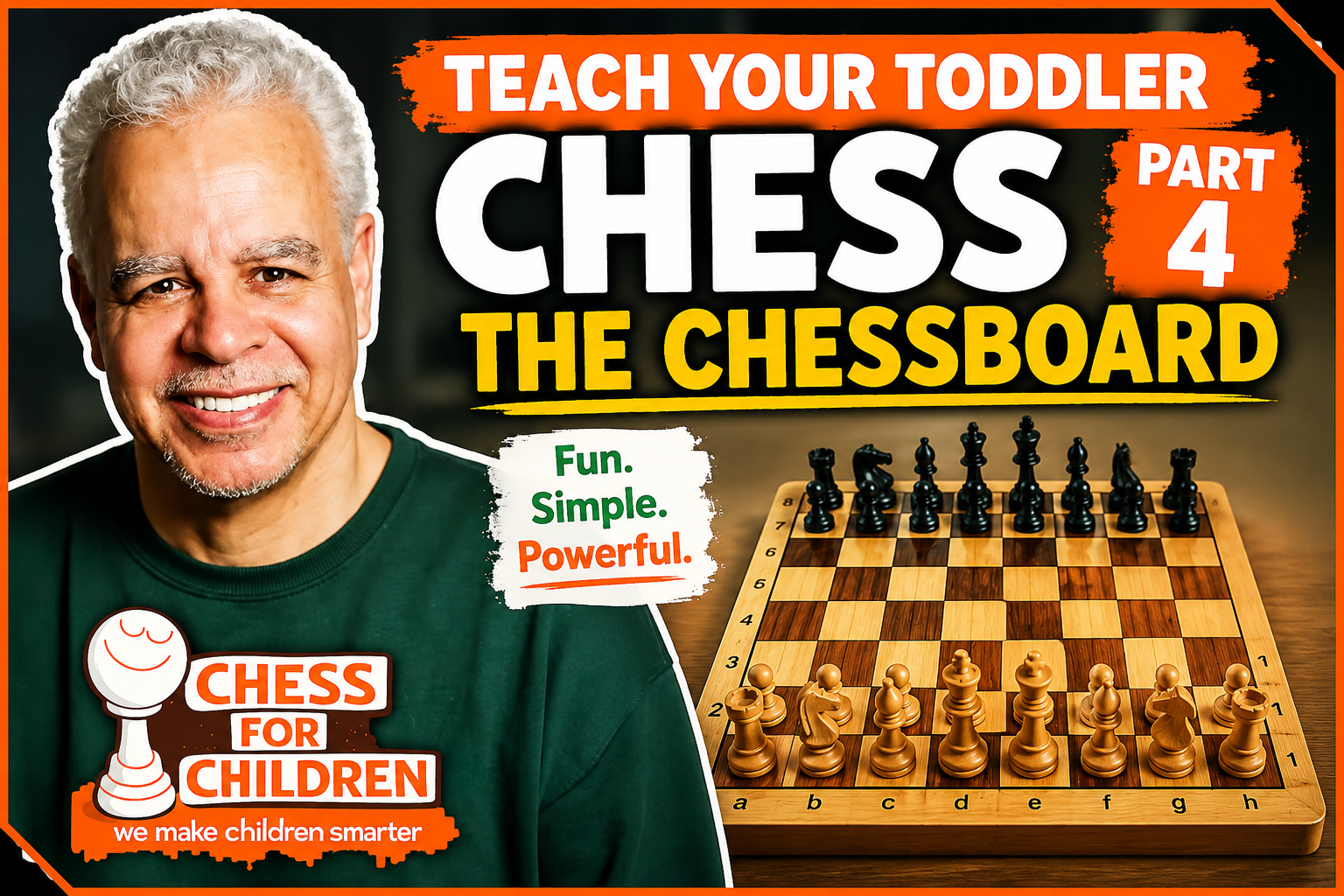
Teach Your Toddler to Play Chess — Part 4
By Ernest Colding, National Chess Master | Chess for Children, Brooklyn, New York
Part of our free course: Teach Your Toddler to Play Chess — teaching children as young as 2 years of age.
- Part 1: Introduction
- Part 2: Setting Up a Learning Environment
- Part 3: Setting Goals and What You Need
- Part 4: The Chessboard (this lesson)
- Coming next: Part 5 — The Pawns
Welcome to Part 4
In this lesson, we are going to introduce your toddler to the chessboard — the magical kingdom where all the chess pieces live and move.
One of the most important principles I have learned in over 40 years of teaching chess to children is this: never assume that a young child already knows something. Starting from scratch does two things — it shows you the skills they have, and reveals the skills they still need to develop.
This lesson will test and build your child's proficiency in five key areas: language, shapes, colors, counting, and patterns.
Goals for This Lesson
By the end of this lesson your child will be able to:
- Identify colors and distinguish light from dark
- Recognize and name basic shapes
- Understand and follow a pattern
- Recognize straight and diagonal lines on the chessboard
The Points System — Keep Them Motivated
Before we begin the activities, let's talk about motivation.
Setting up a points system is one of the most powerful things you can do when teaching young children. Every time your child conquers a milestone, give them points and praise. Don't be stingy — celebrating small wins builds the self-esteem that makes children want to keep going.
You can download printable point tokens from our PDF file, or create your own. Tell your child that reaching a certain point total earns a reward — but keep the reward small and simple. Children are motivated by the challenge itself. A sticker, a high-five, or an extra bedtime story is plenty.
A Word About Patience
Always remember: you are dealing with little ones.
You cannot force a toddler to learn on your timetable. They will learn only on their terms. Your job is to make the process fun for both of you. If they are not getting something, don't make it a big deal — because it isn't. Keep it light, keep it playful, and the learning will come.
Teaching the chessboard will be very rewarding — but only if it never feels like a chore for you or your child.
Part 1: Shapes and Colors
The chessboard is made up of 64 squares — alternating light and dark. Before a child can navigate the board, they need to understand this pattern. Here is the simple idea to introduce first:
🎨 Activity 1: The Colors Game
- Cut up several pieces of colored paper.
- Sit your child down and ask them to name each color.
- When they succeed — give them points and praise.
- Hold up two pieces of paper and ask: "Which one is lighter?"
- Try this several times. When they get it — give them points and praise.
♟️ Activity 2: Color the Chessboard
- Download and print the Coloring Chessboard PDF. (look at bottom of page for link to activity book page 14)
- Give your child two colored crayons.
- Ask them to color the chessboard following the alternating pattern.
- If they make a mistake, give them a new chessboard and try again — no frustration, just practice.
- When they get the pattern right — give them points and praise.
🔷 Activity 3: The Shapes Game
- Print and cut out the Shapes PDF file. (Look at bottom of page for link to activity book page 12)
- Ask your child to identify each shape.
- When they succeed — give them points and praise.
Part 2: Lines on the Chessboard
Now that your child understands squares and colors, it's time to introduce the concept of lines. Lines are important because the chess pieces travel along lines to move around the board.
There are two types of lines on the chessboard: straight lines and diagonal lines.
I like to explain it to children this way: the chess pieces are like Dorothy on the yellow brick road — they follow different types of roads depending on how they move.
Straight Lines
Straight lines go up, down, and side to side. Teach this with the poem:
Diagonal Lines
Diagonal lines travel on a slant, always staying on one color. Teach this with the poem:
Color to color, tip to tip — that is how diagonals sit."
📐 Activity 4: The Lines Game
- Pull out the chessboard and the cut-out squares from the Squares PDF. (Look at bottom for Page for link to activity book page 16)
- When they accomplish this — give them points and praise.
- Now have them arrange the squares diagonally — up and down.
- If they struggle, have them repeat the poem: "Color to color, tip to tip — that is how diagonals sit."
- When they get it — give them points and lots of praise!
Wrapping Up
When you follow this method systematically and with a nurturing spirit, your child will develop firm control over the chessboard. It is worth taking the extra time to make sure there are no gaps. Slow and steady is the buzzword here — any skills your child is missing will definitely show up later.
On behalf of the Chess for Children family and myself — thank you. I hope your child and you had as much fun working through this lesson as I had in making it.
Next up: Part 5 — The Pawns!
Chess for Children provides chess lessons for children in Brooklyn and online.
Founded by National Master Ernest Colding with 40+ years of experience teaching children as young as 2.
Free Teach Your Toddler Chess Activity Book
Parents often ask me what activities they can do with their children between lessons.
To help, I've created a free companion workbook packed with chessboard activities, coloring pages, challenges, and games designed specifically for young children.
👉 Download the Teach Your Toddler Chess Activity Book
Teach Your Toddler Chess Part 3